
Remote work went from exception to default almost overnight, and it turned out the digital workforce never needed the office to be productive. Doing that work well from another country, though, is a different skill — one you mostly learn by getting it wrong. Here is what experience has taught me about engineering seriously while living somewhere far from home.
Be a guest, not a tourist
It is easy to spend a trip inside a bubble of nice cafes and curated accommodation, and just as easy to forget that a steady income in euros or dollars puts you in a privileged position relative to the people around you. The authentic rhythm of a place lives outside the bubble. Engage with the local community, take the less-traveled path, eat the regional food, and approach the whole thing with humility. You are a guest; act like one.
The logistics nobody warns you about
Working from a country you have no tax agreement with can create genuinely complicated tax situations. Plenty of remote workers tell themselves they are “just traveling on savings” while quietly working full-time — a better story than the reality, which can get expensive. Understand your obligations before you go, not after.
A setup that actually works
The right gear is the difference between a productive month and a sore back. My baseline: an 80% keyboard, a mobile SIM Wi-Fi router, a mouse, and a mousepad. For any stay longer than a month, a second-hand monitor and a real office chair are worth every cent.
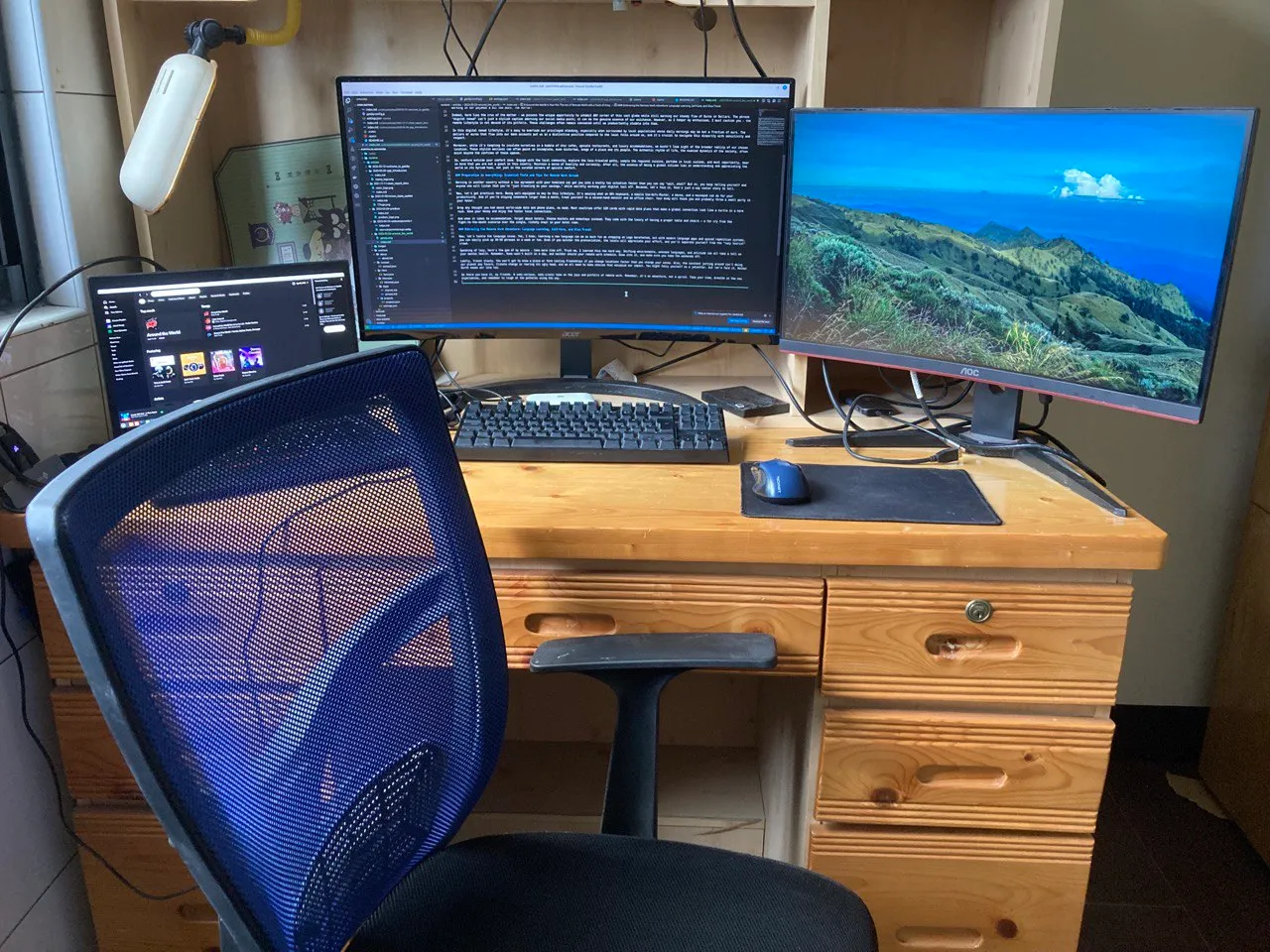 My setup in Taiwan. Not as impressive as a home office, but it gets the work done.
Connectivity and accommodation
Skip expensive global data plans. Most countries sell local SIMs with fast data that outperform international options for a fraction of the price. And skip hotels where you can — hostels and homestays far more often have a proper table and chair, which matters a lot more than a minibar when you’re working eight hours a day.
Pace yourself
A few hard-won lessons:
- Learn some of the language. With spaced repetition you can pick up 30–50 useful phrases in a week or two. Imperfect pronunciation still earns goodwill.
- Take more time off than you think you need. New environments, unfamiliar languages, and solitude are a real load on your mental health. Keep your weekends.
- Travel slowly. You won’t know a place — or make a lasting friend — if you move faster than you change your socks. It is also far kinder to the planet; constant flying is hard to square with caring about climate.
Remote work abroad is an adventure, not a sprint. Take your time, stay curious, and budget for the potholes — there will be some.